The Craft Behind the Harrods Collection: Leather Bags

Words by Grace Cain

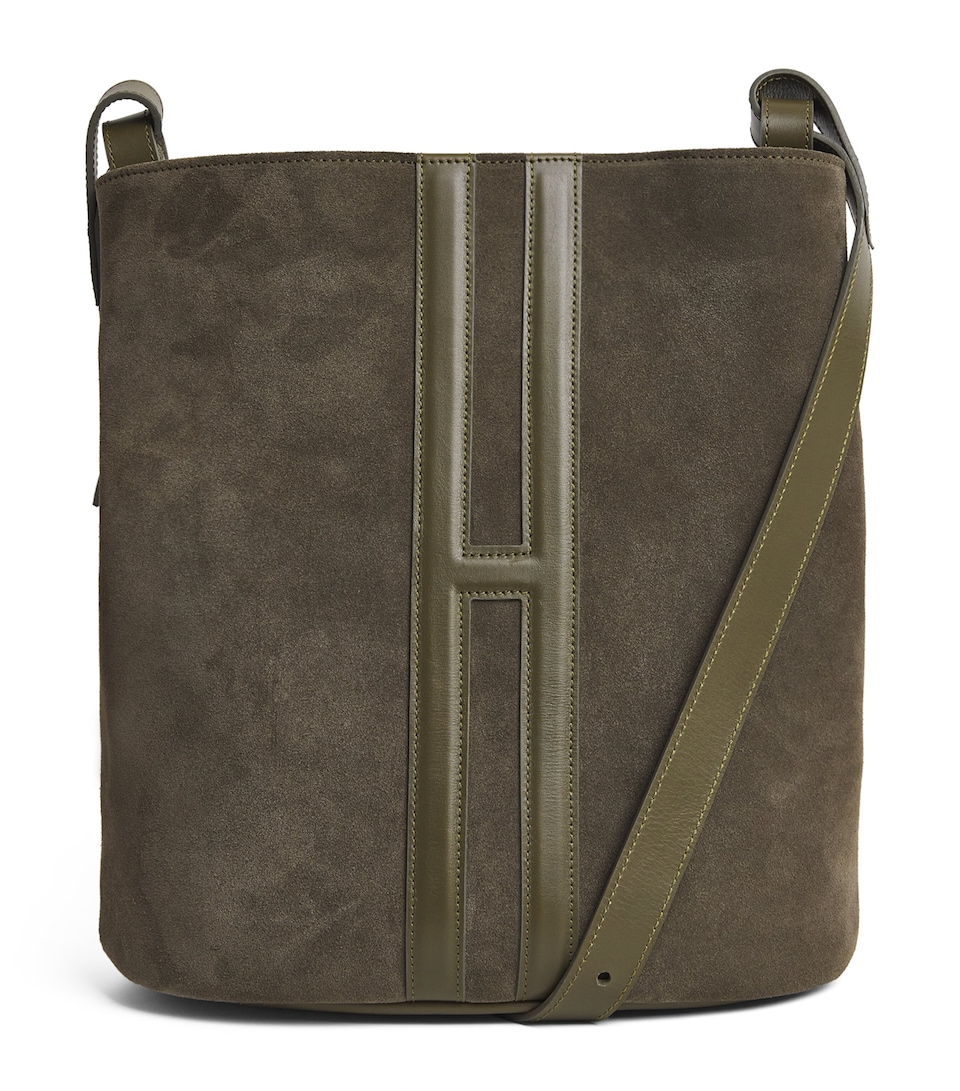
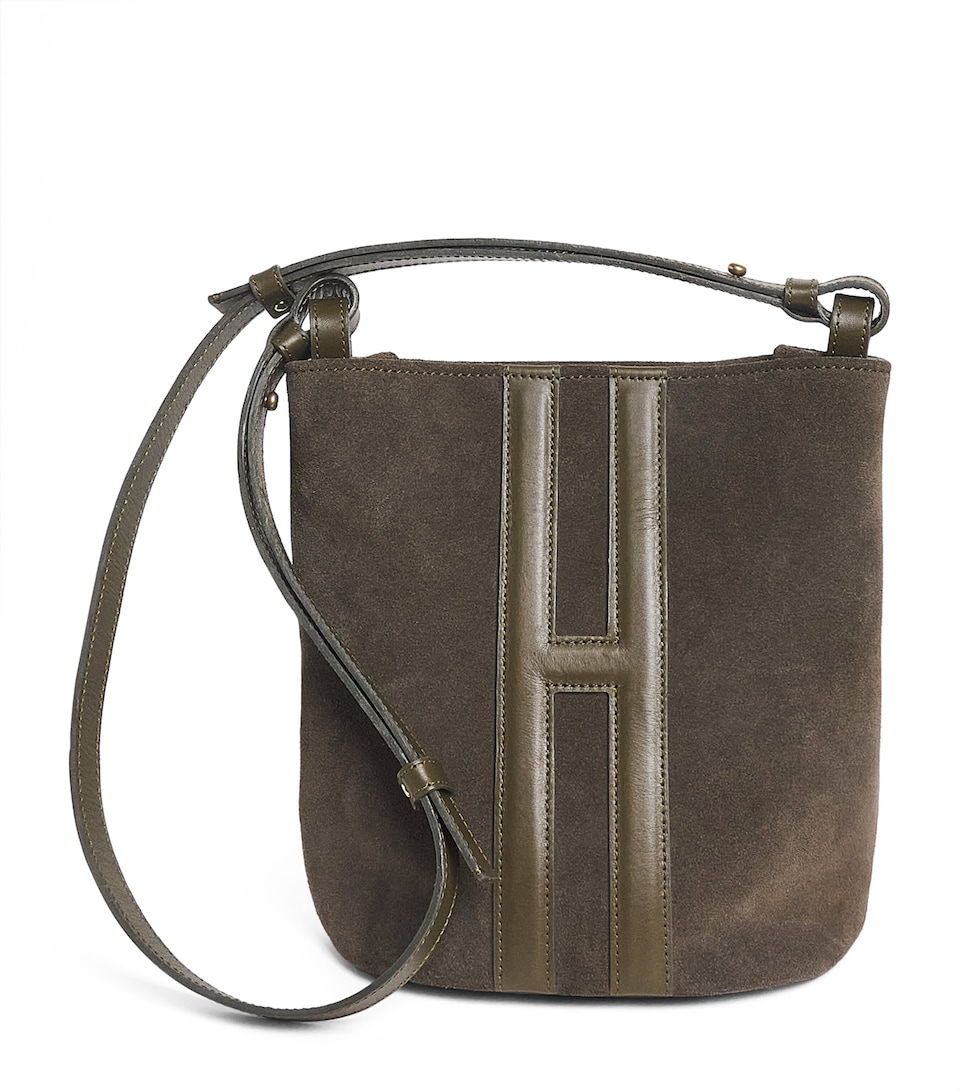
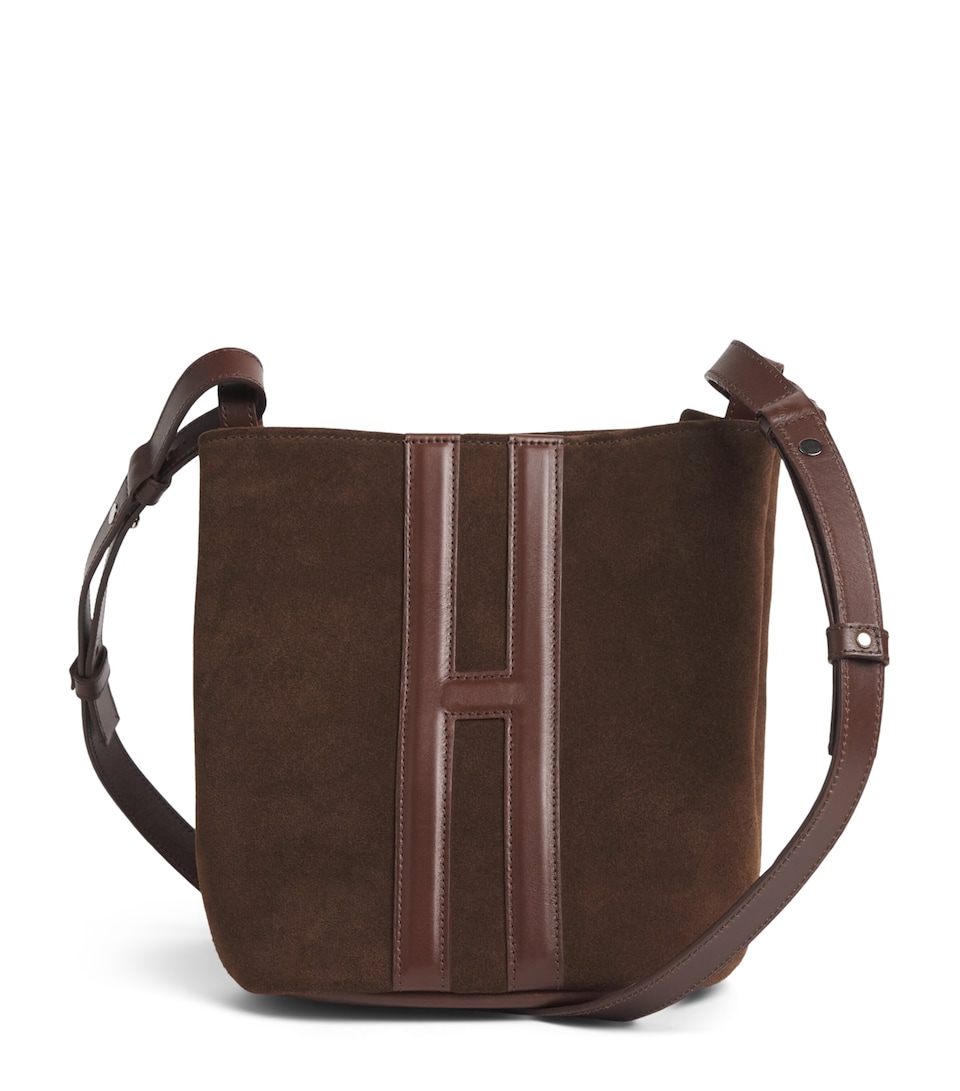
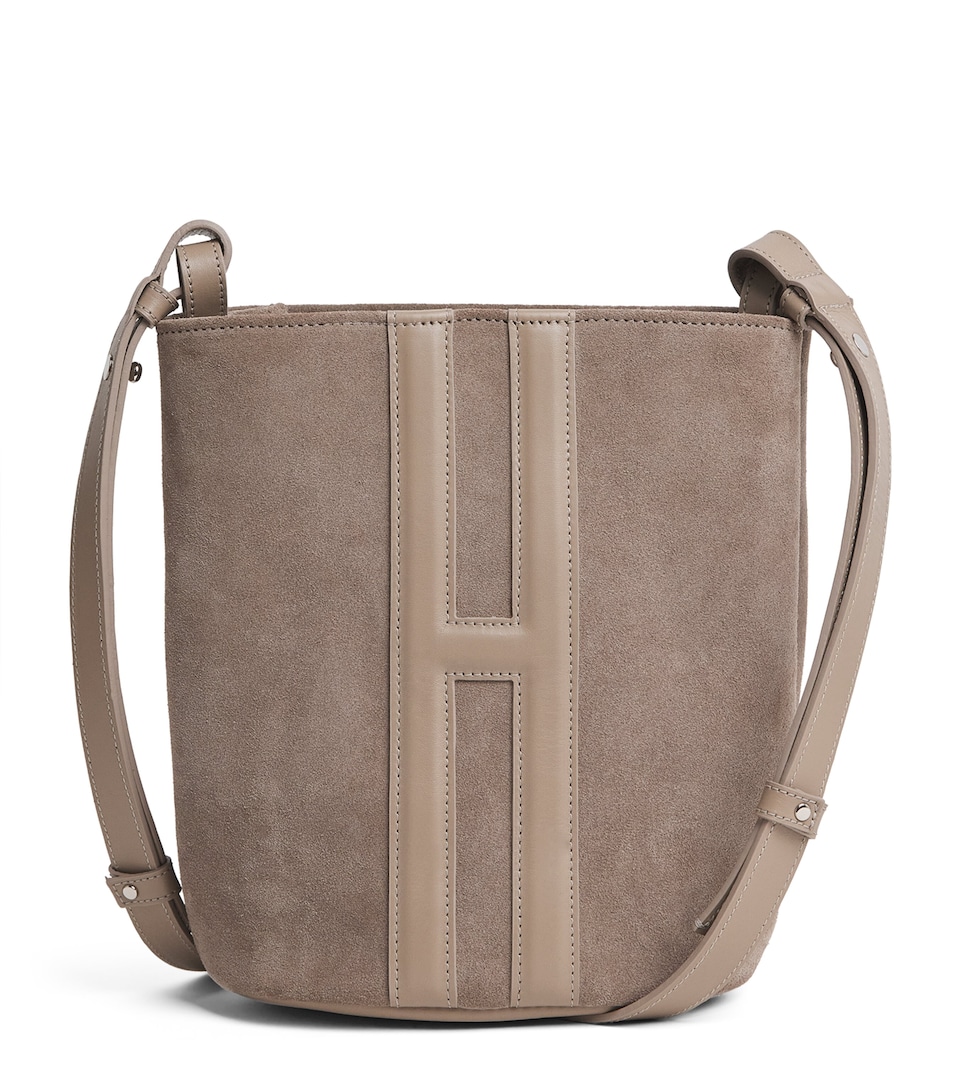
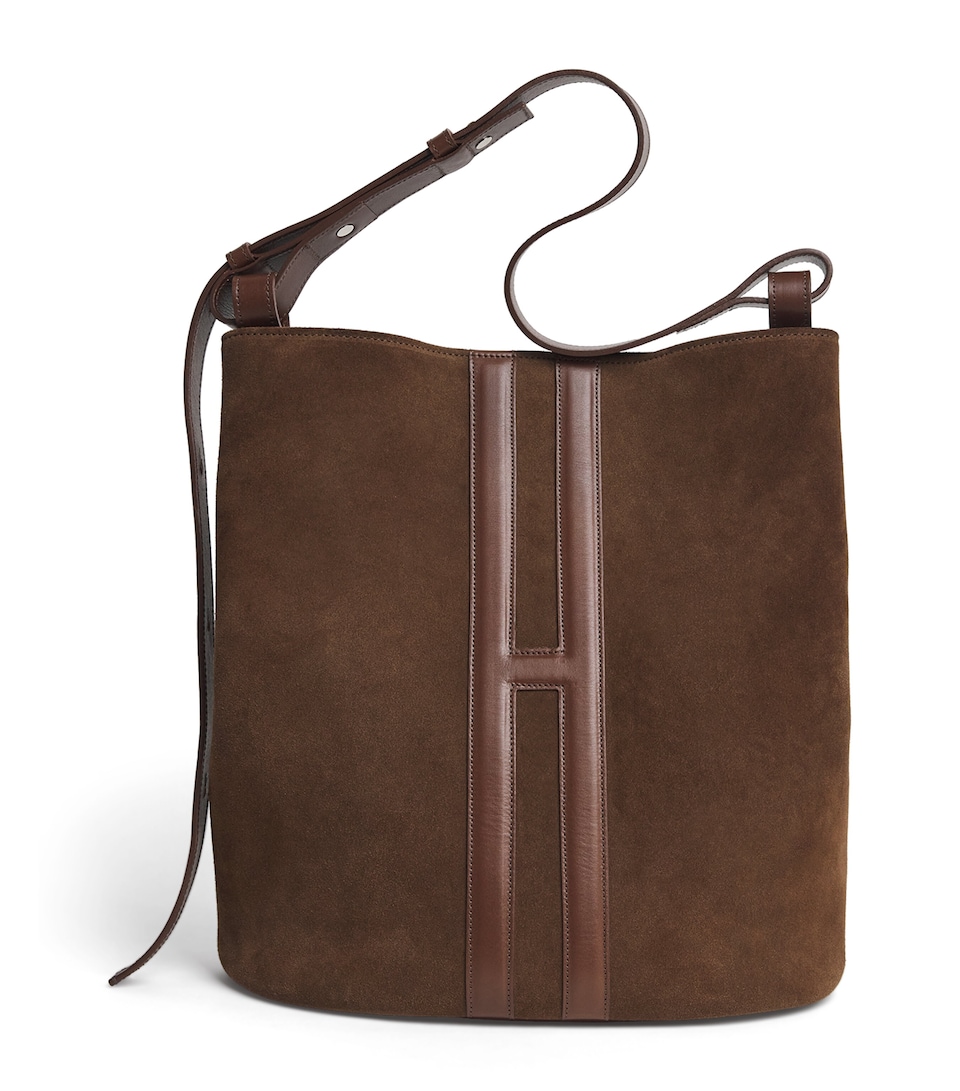
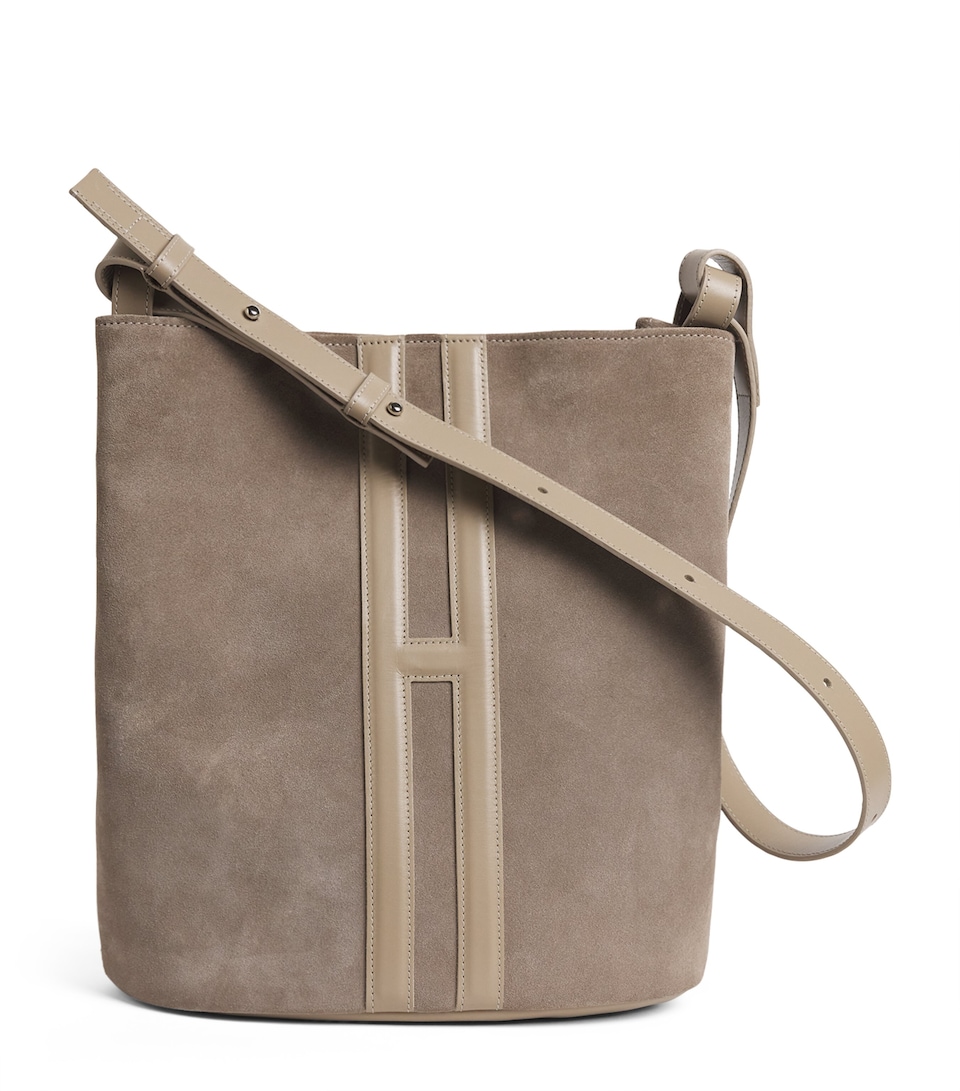
In a dedicated workshop in the quintessentially English village of Lavendon, historic business Tusting creates handmade leather bags, now including a collection made exclusively for Harrods. We meet Alistair and Gillian Tusting, the fifth generation of this family-run leather-making business, to witness the magic behind the craft.

Picture a typical, quiet village in the middle of England. Got it? Chances are, you’re imagining something a lot like Lavendon – old stone cottages, fields stretching away into the sky, two pubs (and little else). What might not feature is the family-run luxury leather goods factory with over 150 years of heritage – a story that now includes Harrods.

Part of the Family

Despite growing up surrounded by the traditional leather industry, Alistair Tusting didn’t intend to go into the family business. “I was working as a design engineer, but looking for a new move. When my father and brother asked me to join the family business, I thought – why not? And it can’t have been that bad, because I’m still here 35 years later.”

“I am a fifth-generation leather-maker and leather-user,” he continues. “My great-great-grandfather [Charles Pettit] started a tannery in a nearby village, where he made and finished leather for the traditional English shoe trade in Northampton.”

By all accounts, about ten or fifteen years ago (no-one can quite remember), Alistair started asking his wife, Gillian, to help out within the business. “I was at home with two very small children, so of course that meant I wasn’t busy enough,” she says, wryly. Over time, as Alistair’s father and brother retired, Gillian’s role snowballed. Today, she looks after the brand and any marketing, while he covers the operations and finances.

“It’s quite normal for a couple to be entrepreneurial and start a business together, but for a wife to get involved in a generations-old business that didn’t involve her at all? I think that’s less normal,” says Gillian. “We have completely different responsibilities – I couldn’t run the parts that Alistair does, and he couldn’t run the parts that I do. We don’t cross over much – except of course when I want to spend more money and he won’t let me,” she laughs. “What’s that if it’s not husband and wife?”

Do they ever have ever major disagreements? “We get on so well, it’s ridiculous,” she says. “It’s sad how we well get on. I think if you find a partnership that can last for 30 years – and you can live together and work together, and survive and be happy – then you’re very lucky.”

Craft in the Bag

“There are very, very few handbag makers left in the UK, and even less who are still using natural leathers because it is so difficult,” says Alistair. “It involves combining an understanding of leather with the skill sets you need for the machining and the cutting.”

Gillian agrees. “I think we bring a personality and character to the pieces that is a little different to other manufacturers,” she says. “For us, it all begins with the selection of the leather. That part is absolutely critical to the character of the end piece, so the leather must be of beautiful quality.”

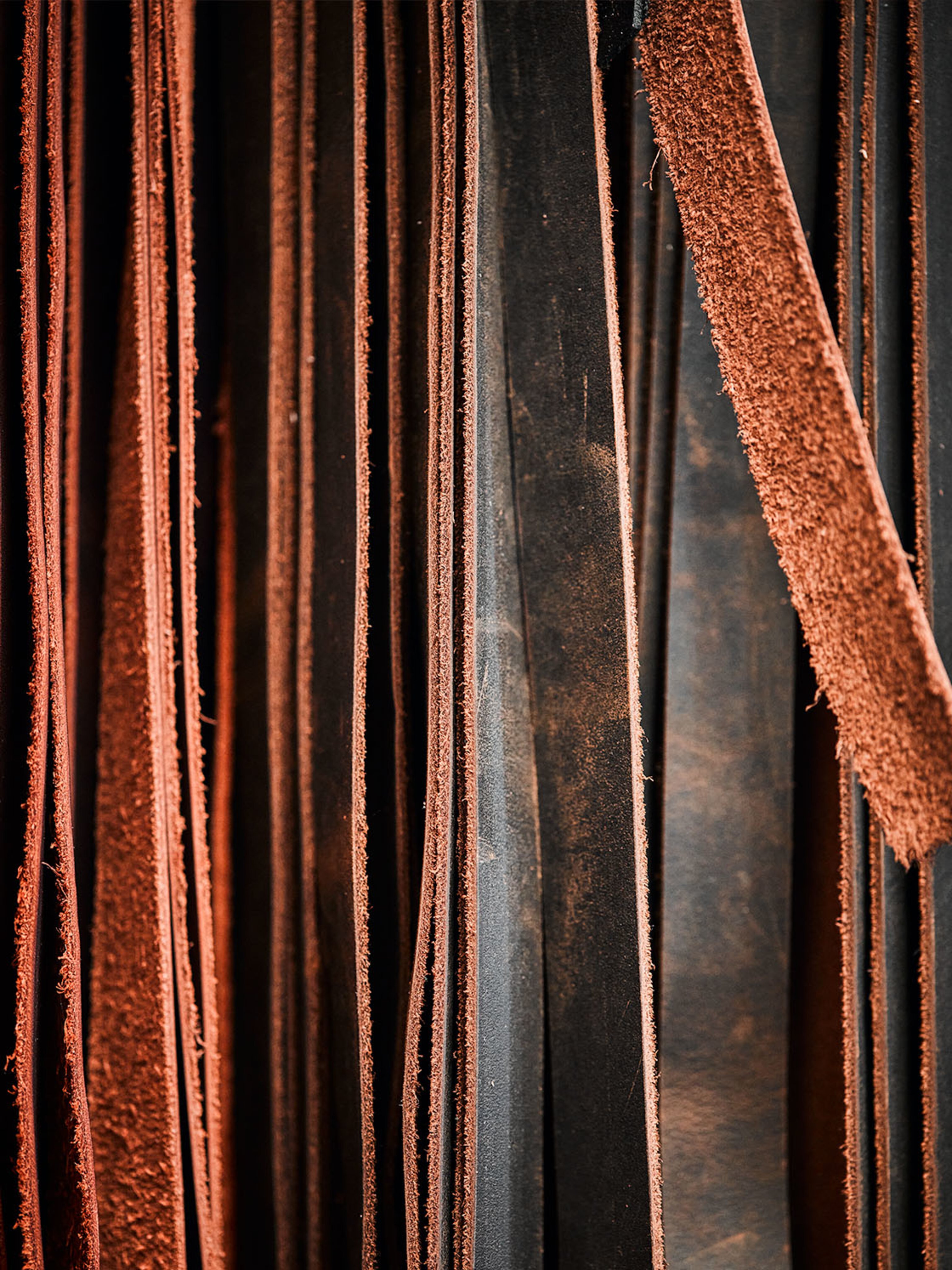
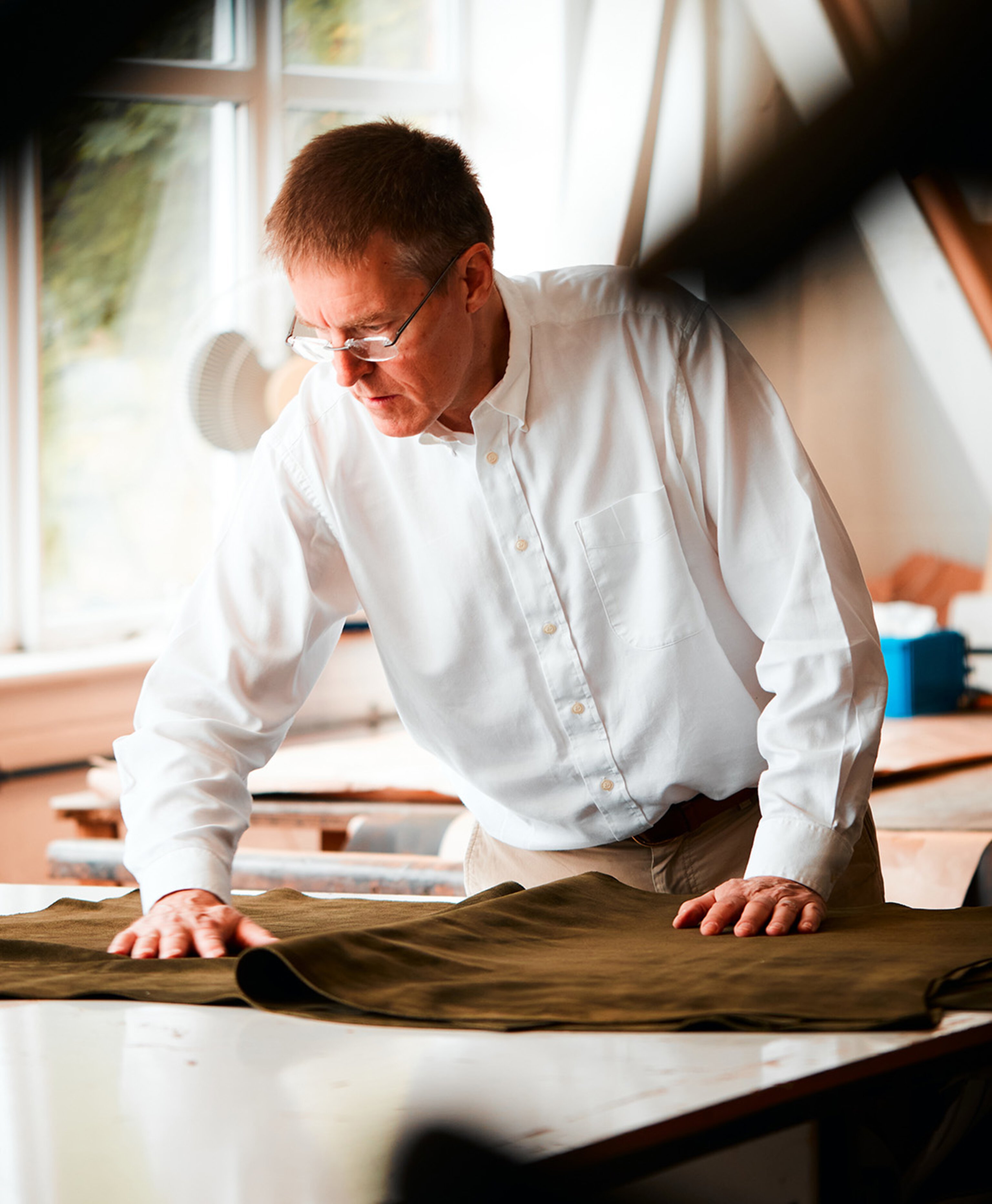
Alistair pulls one such roll of leather (in Harrods green, of course) from its place among rows and rows of material. He unfurls it across a table, sweeping his fingertips across the surface. “The preeminent thing that we want to do here at Tusting is to show the natural beauty and character of the leather,” he says. “And leather is a wonderful material; a by-product that you can transform into something with longevity and character.”

Tusting uses full-grain leather that hasn’t been sanded or coated with plastic, meaning that its products will better retain their resilience and ability to age. Instead, it is dyed like a piece of fabric so that you can still fully see the qualities and textures of the material. “The hides we use show some signs of life,” says Alistair. “Leather is a natural thing, so it has some characteristics that can be incorporated into the final design as nice features that stop the bag from feeling like a piece of plastic. At the same time, you have the
problem that leather is a natural thing, so there are some characteristics you need to avoid – any blemishes or defects, for example. You need to understand each piece of leather when you’re cutting it to ensure you’re getting the best out of it.”

“We’re not trying to make mass-produced, identical products,” he continues. “Every leather bag is unique, because every piece of leather is unique – and in its uniqueness, it shows beauty.”

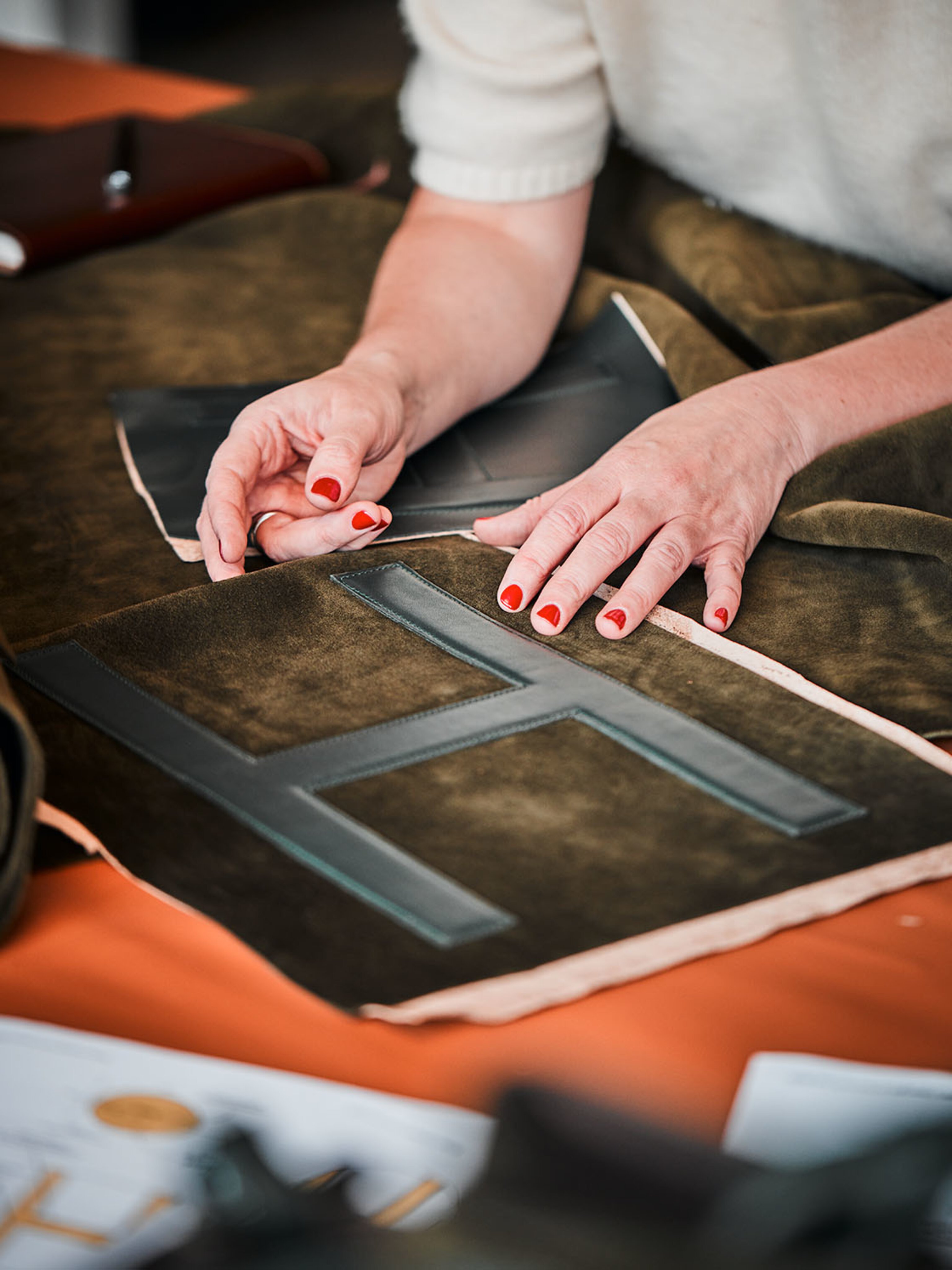
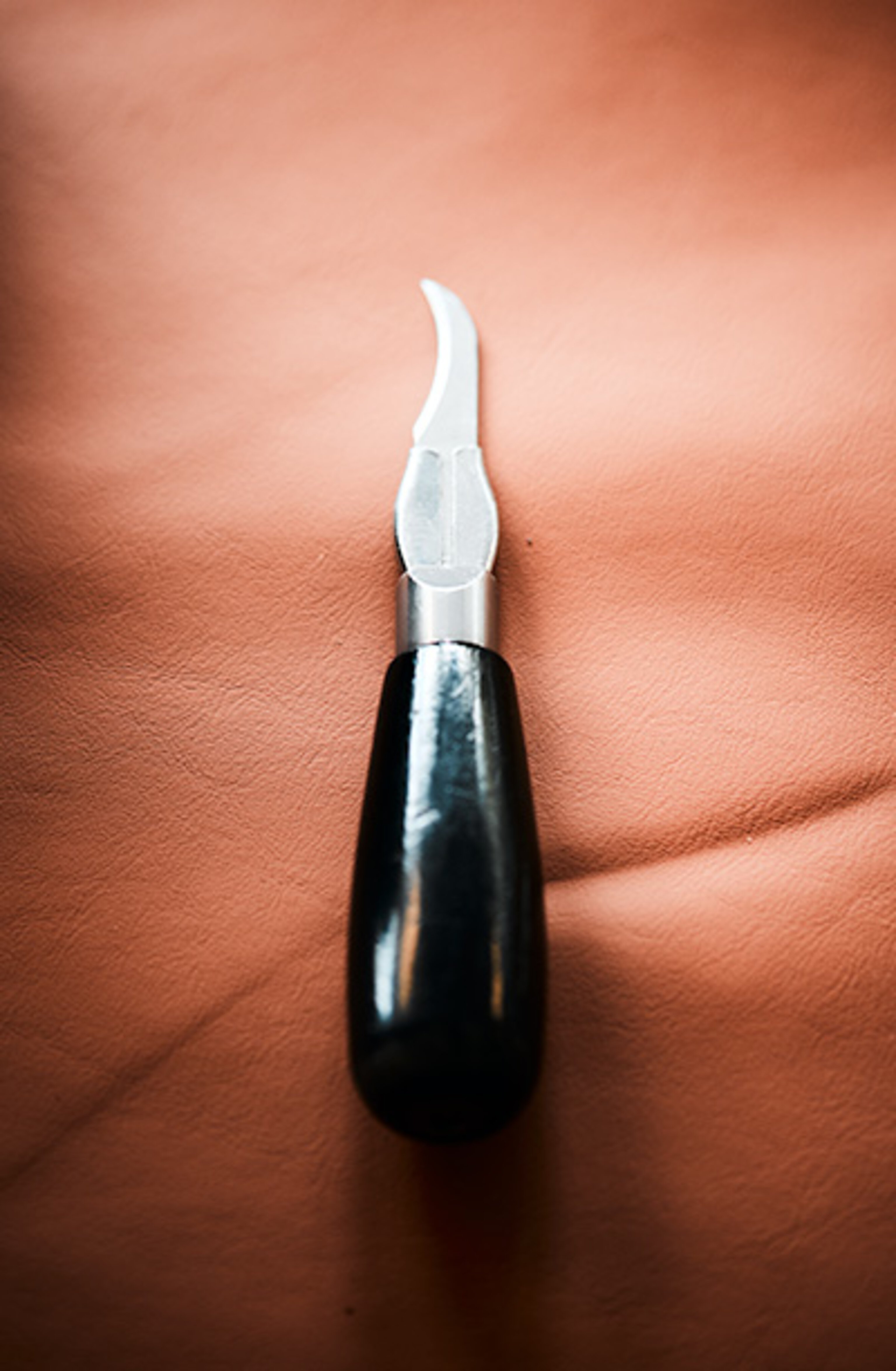
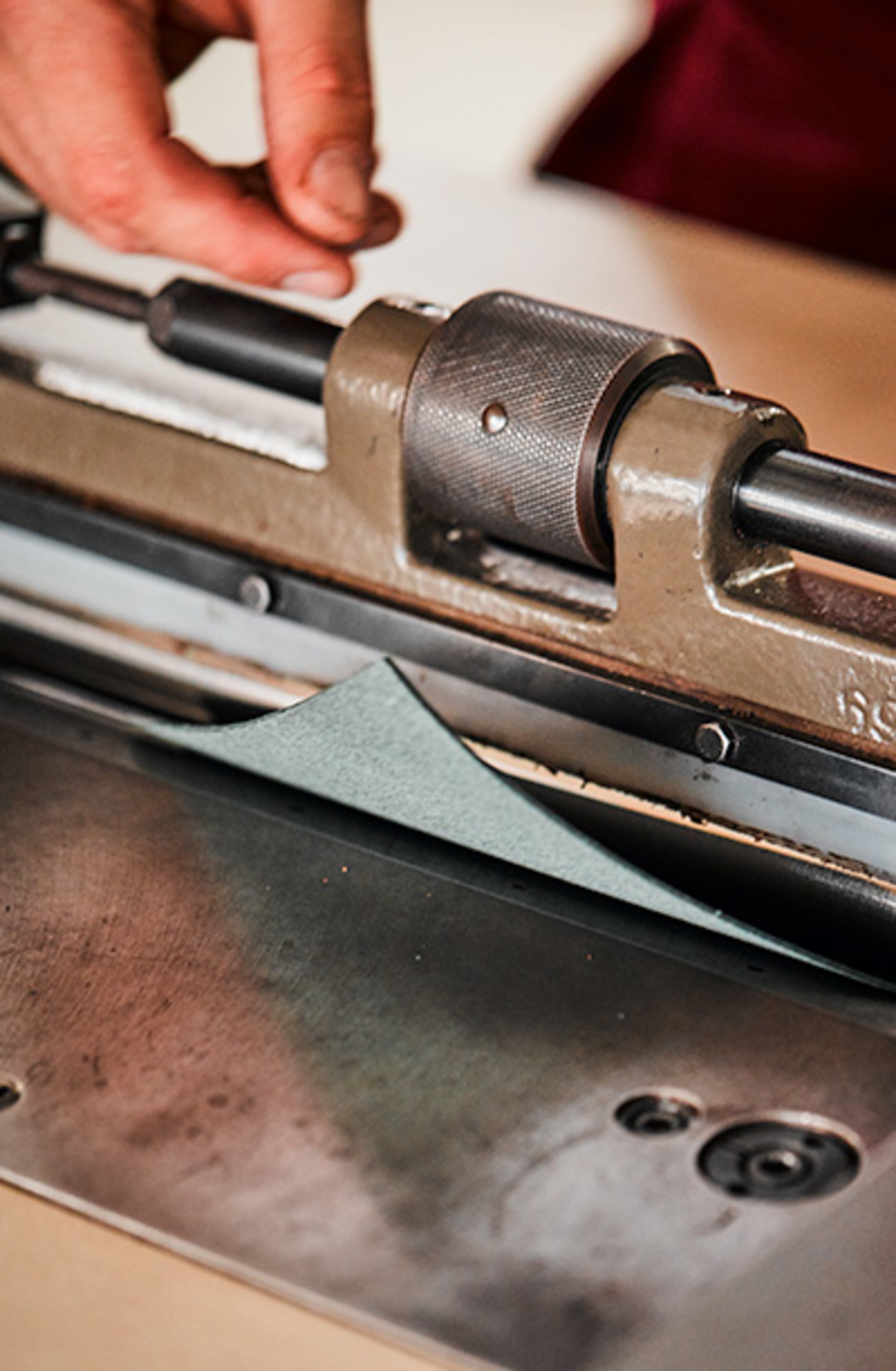
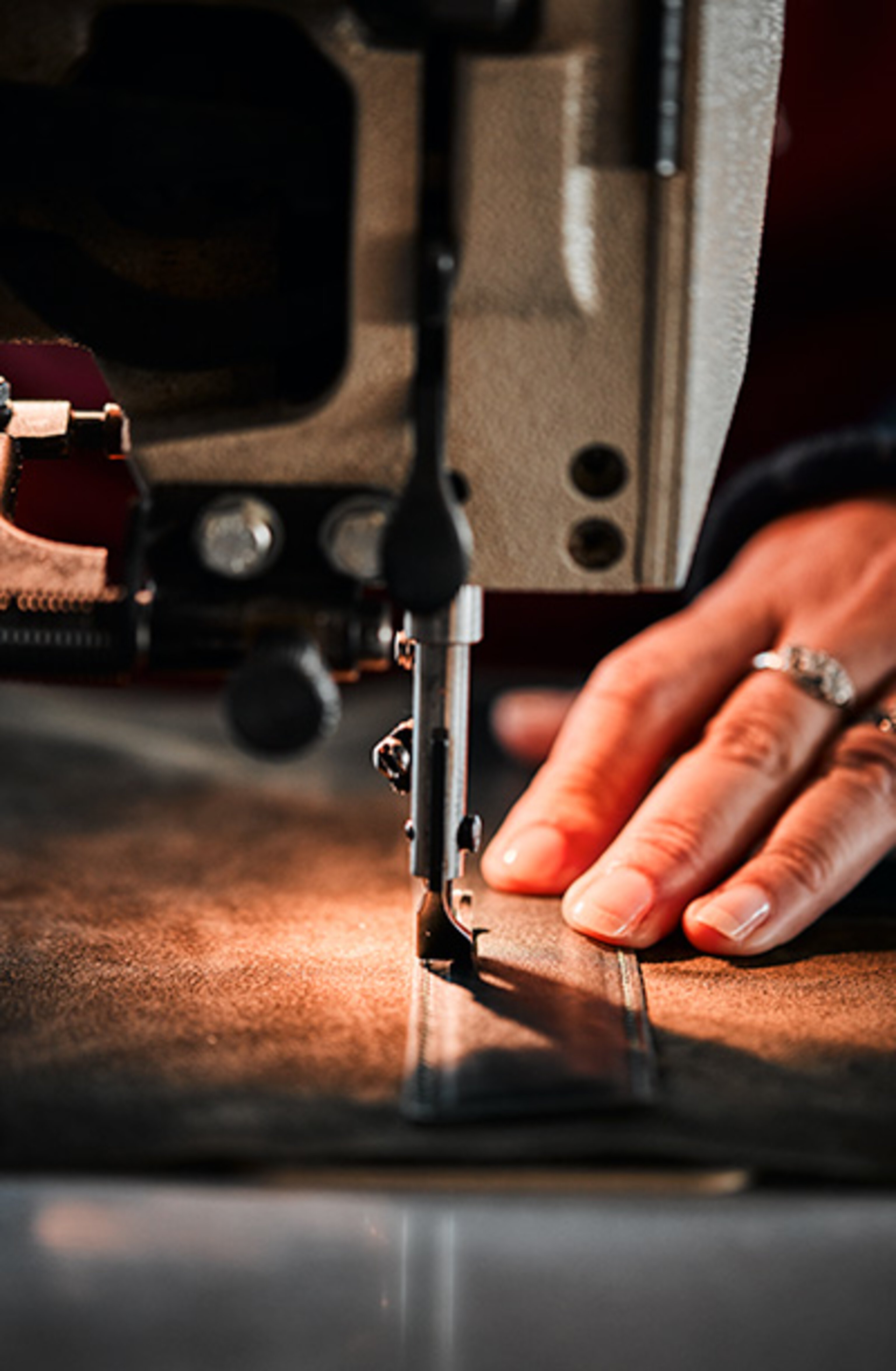
In the surprisingly tranquil factory, quiet radio chatter mingles with the vague hum of hammering and stitching. Gillian takes us briskly and expertly through the different workstations; from the clicker press that cuts out each leather shape using locally-crafted knives (imagine a giant, very dangerous cookie cutter), to the flatbed sewing machines set in tables that can support the weight of the material. “The stitching process is the most skilled process we have in the workshop,” she explains. “This is where years of experience of hand-eye coordination, timing, and attention to detail come into practice – it’s not a skill that just anyone can learn.”

Cutting

Using bespoke knives, each individual component of the bag is cut on the cutting press.

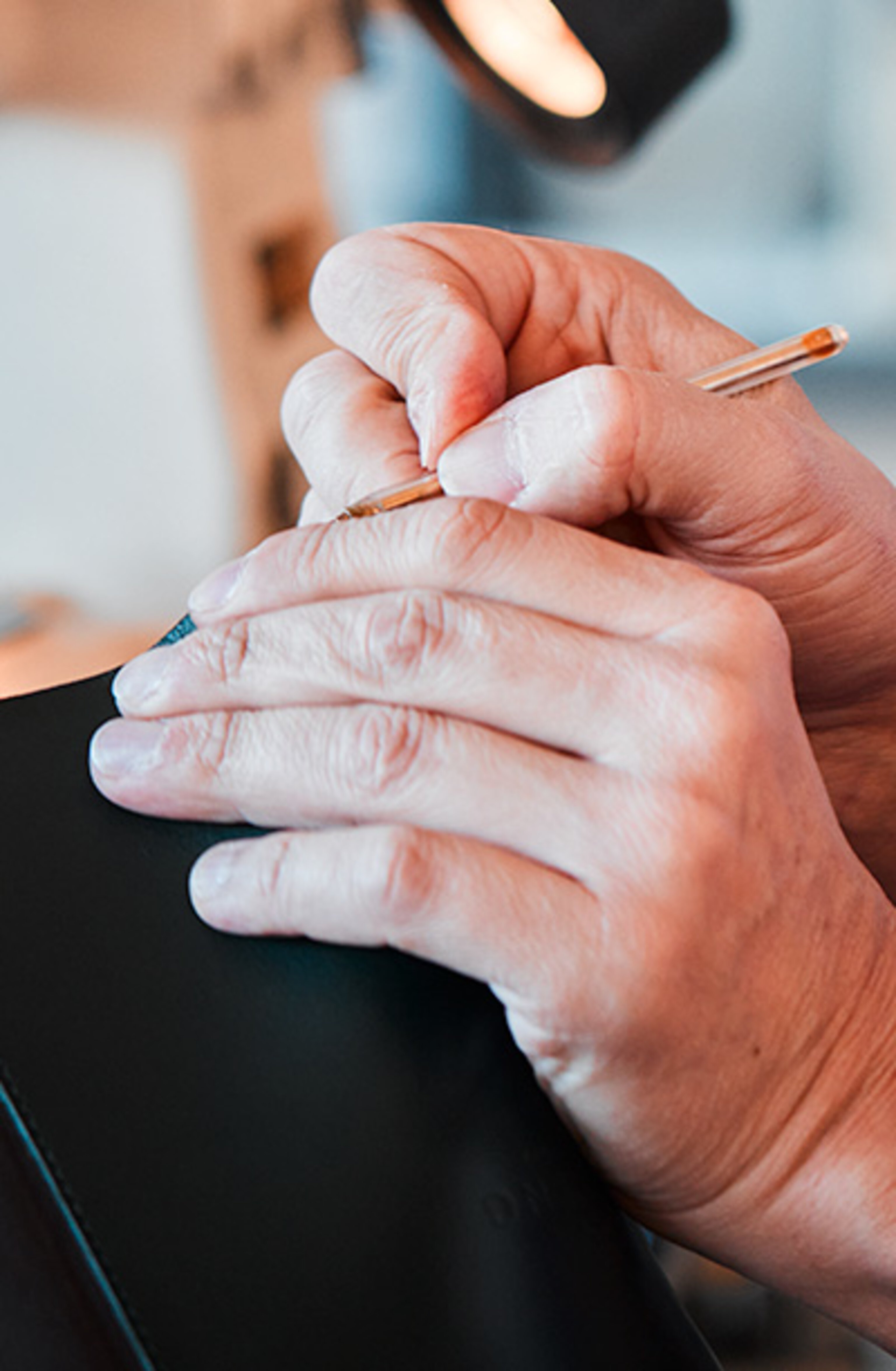
Edge Painting

The edges are hand-painted with dye that is appropriate to the colour of the leather.

Skiving and Splitting

The pieces are split to a uniform thickness, and the edges are skived thinner so they can be sewn together.

Sewing

The pieces are assembled on flatbed sewing machines – a highly skilled job.

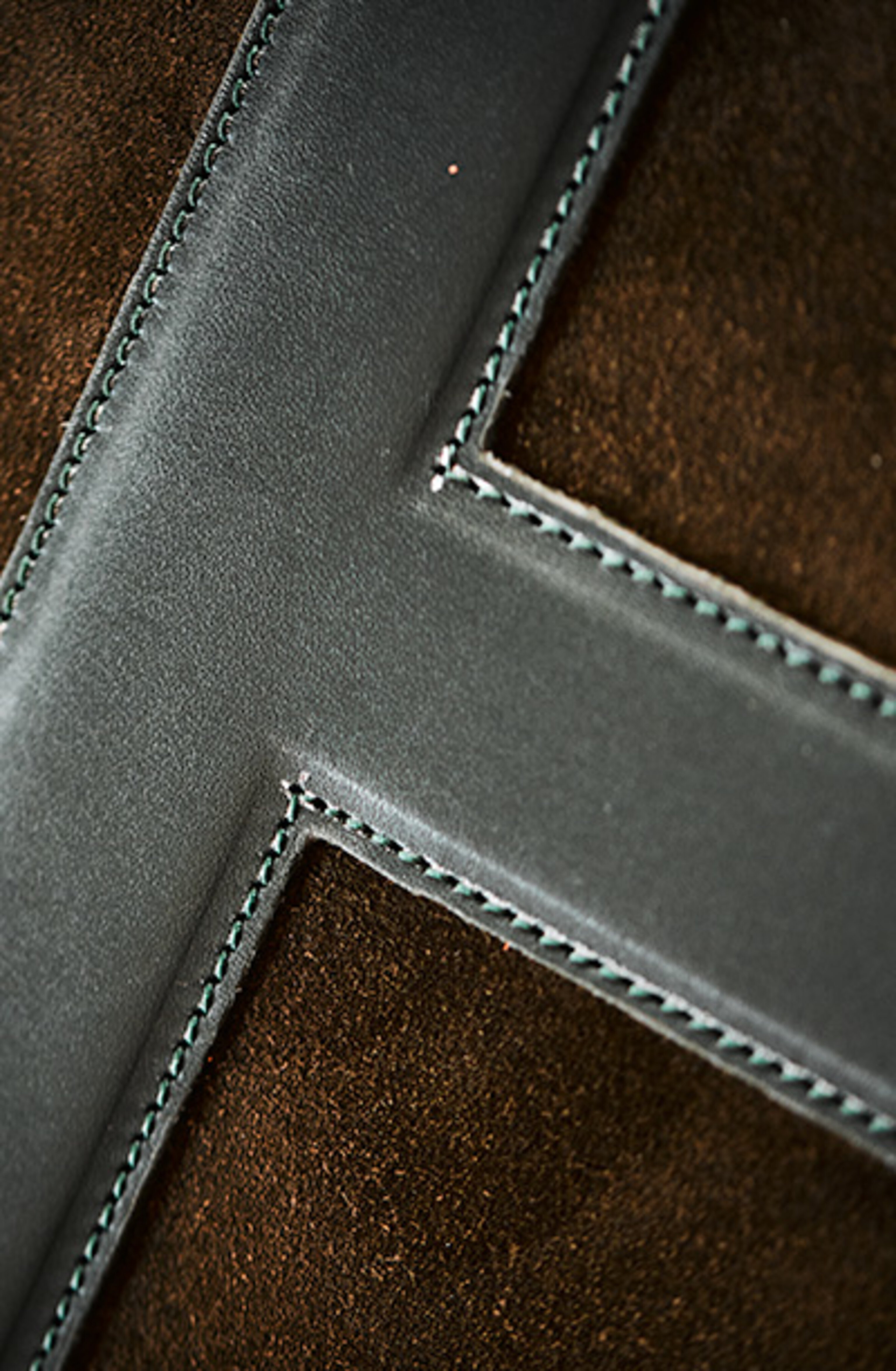
Hand-Finishing

Details are added and the finished piece is carefully inspected to ensure its quality.

Made in Britian

As Alistair mentioned, one of the reasons that Tusting is unusual among leather goods manufacturers is that it’s still based in the UK. “We have an opportunity to champion a bit of British manufacturing, which is a good thing for me, for the family, and for the people who work here. Much of our team live around here; they walk to work, they walk home for lunch. That’s one of the hidden joys about being an employer who makes products in Britain – you become part of the local community.”

It's a world that Alistair’s great-great-grandfather probably wouldn’t recognise. Lavendon is nestled close to the borders with Northamptonshire and Bedfordshire, both of which were historically renowned for their tanneries and a vibrant leather industry. Today, that trade is all-but gone. Tusting has had to evolve to survive; in the ’80s, it made the jump from pure tanner to finished goods.

“Running a family-based enterprise is a great thing,” says Alistair. “It’s great to have the heritage. It’s great to know that grandad was doing it, and great-great-grandad before him. It’s great to know that you are continuing that path. On the other hand, that history can sometimes bear heavy on you – you’re thinking
oh my god, I’ve got to keep this going. It’s my responsibility.” He thinks for a second. “But I think that’s at the back of my mind. The most important thing is for us that we’re creating nice products that people use and enjoy, that make them smile every day – and that’s a lovely thing to be doing.”

Related Stories

Behind the Harrods Collection: Cashmere

We take a trip to the Scottish factory responsible for some of the world’s finest cashmere – including the new Harrods collection.

Behind the Harrods Collection: Toys

Journey to the village of Lavendon in Buckinghamshire to meet the family of makers behind Harrods’ new collection of handmade leather bags.

The Harrods Collection

From cashmere to ceramics, our in-house collection is curated to bring elegance to your everyday.